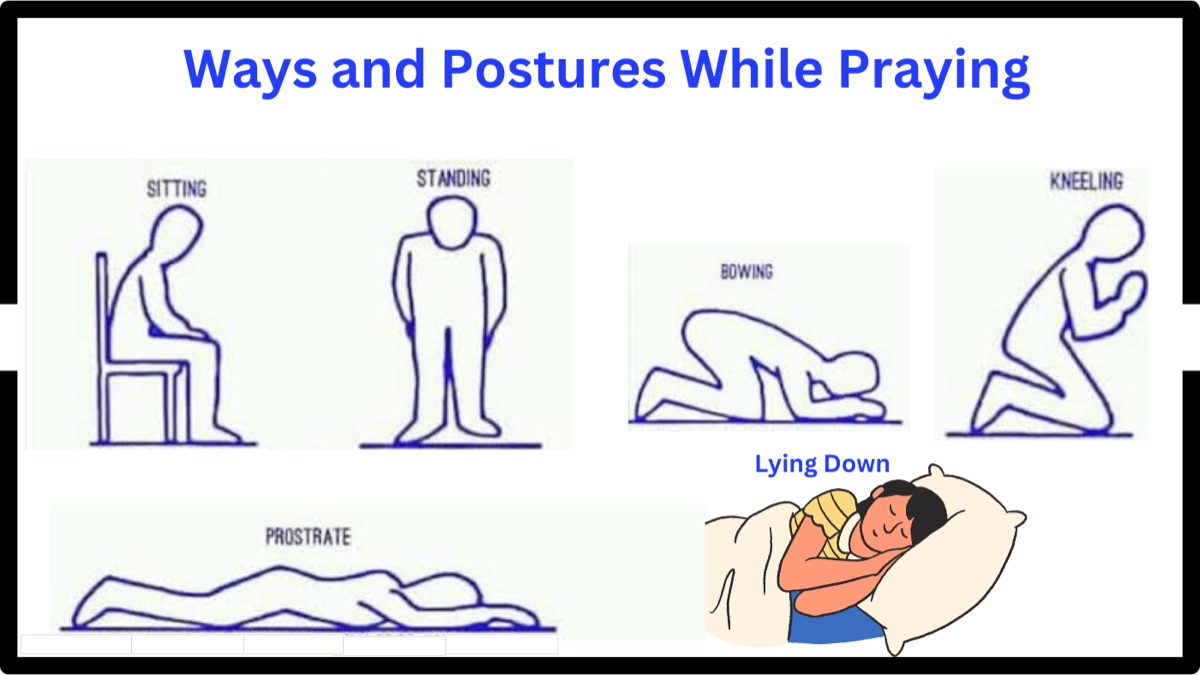
There are no prescribed positions or postures for praying to God. Communication with God does not require a certain physical position, but postures do give expression to the attitudes of our hearts. When we go through the scriptures, we will observe that there are various postures adopted for prayer. Some of the postures are discussed below.
1. Lying Prostrate Before God
No position symbolizes humility better than being on our faces before God. When prostrating, people lay down horizontally with their faces on the ground and usually with outstretched arms. A way to acknowledge before God on one hand our unworthiness, inadequacy, and inability to accomplish His will, and on the other His indispensability and our full dependence on Him. Lying prostrate before God expresses the following attitudes:
It is an acknowledgment of our total unworthiness. Abraham recognized his unworthiness before God and “fell on his face” before the Lord. (Genesis 17:1–22.) It is a recognition of the need for God’s mercy. When the leper came to Jesus for healing, he fell on his face and begged for mercy, saying, “Lord, if thou wilt, thou canst make me clean” (Luke 5:12.) It is the right response to a serious crisis. When the leaders of Israel often faced impossible situations and knew that only God could deliver them, they fell on their faces before Him and sought His aid. (Numbers 20:2–6 and Joshua 7:1–6.)
2. Kneeling
There are many examples of praying while kneeling. Daniel prayed on his knees three times a day (Daniel 6:10), Stephen fell on his knees and talked to the Lord before he died as a martyr (Acts 7:60), and Peter knelt down before the corpse of Tabitha, prayed for her, and she came back to life (Acts 9:40). It acknowledges the Lordship of Jesus: Kneeling before God provides a visual image of submission to His authority. One day every knee will bow before God, and every tongue will confess that Jesus is Lord to the glory of God. (Philippians 2:9–11). It is a sign of contrite appeal. King Solomon knelt when he asked God to bless the Temple and the people of God. (I Kings 8:54) Elijah knelt in earnest prayer when he asked the Lord to send rain to end Israel’s drought. (I Kings 18:41–46). It is a sign of personal humility. The psalmist humbled himself before the Lord and encouraged others to do the same: “O come, let us worship and bow down: let us kneel before the Lord our maker” (Psalm 95:6).
3. Standing
Standing before the Lord in prayer was also a common practice, perhaps more common than kneeling. One of the most impressive cases is found in 2 Chronicles 20 where a corporate act of prayer is described.
4. Sitting down
The practice of praying to the Lord while sitting down is rare in the Bible but not totally absent. When we recognize our sinful conditions before God, repent of our sins, and believe in Jesus Christ, we are adopted by God. We are seated with Christ at the right hand of the Father. (Ephesians 1:15–23 and 2:4–7)
5. Lying down
Praying while lying down on a bed places the emphasis on prayer as an opportunity to meditate. The classic example is King Hezekiah when he was sick and was told to put his house in order.
6. Bowing Your Head or Body
Bowing heads or bodies shows reverence and submission to God as an act of worship (Genesis 24:26-27). One who bows before God conveys an attitude of honour, reverence, gratitude, and faith, acknowledging that all things come from His hand. When Job suffered great losses, he bowed down on the ground:
Dr Ashwin Drummond