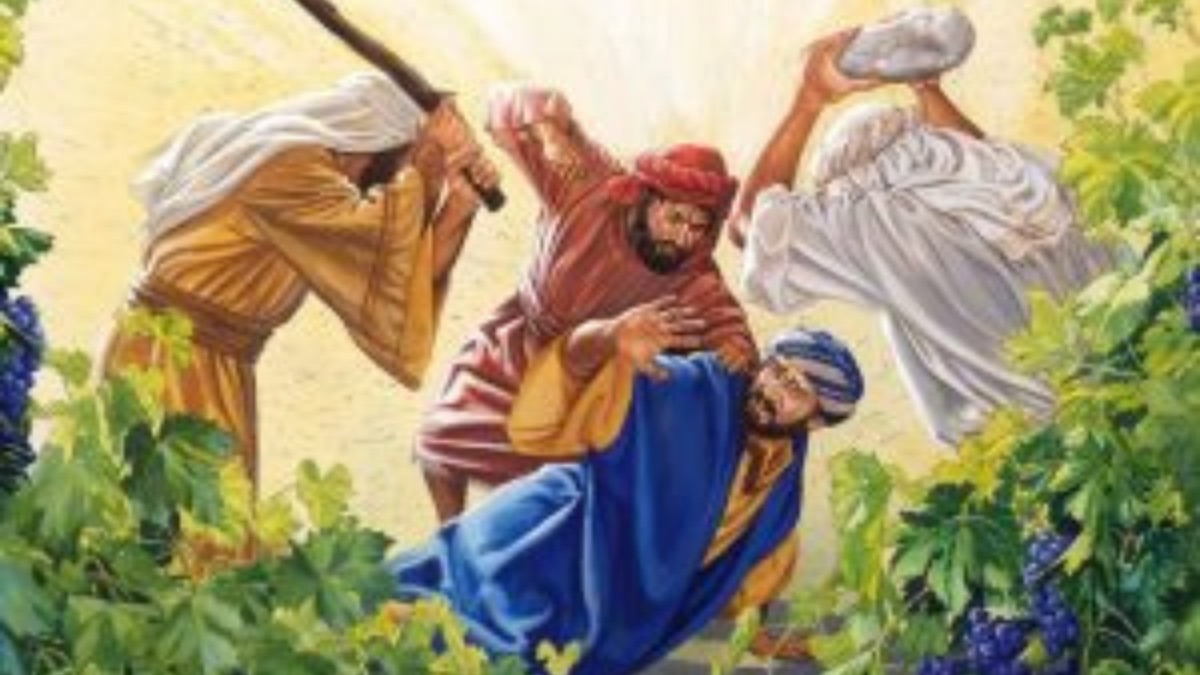
The parable of the tenant and the master is very aptly explained by our Lord and embraces the centrality of his teachings. It appears in Mark 12, Matthew 21, and Luke 20. There was a landowner who planted a vineyard, put a hedge around it, dug a winepress in it, and built a tower. Then he leased it to tenants and went on a journey. When vintage time drew near, he sent his servants to the tenants to obtain his produce. But the tenants seized the servants and beat one, another they killed, and a third they stoned. Again, he sent other servants, more numerous than the first ones, but they treated them in the same way. Finally, he sent his son to them, thinking, ‘They will respect my son.’ But when the tenants saw the son, they said to one another, ‘This is the heir. Come, let us kill him and acquire his inheritance.’ They seized him, threw him out of the vineyard, and killed him.
In this parable, the landowner is God, the vineyard represents Israel, the servants are the prophets, the tenants are the religious Jewish leadership and the son is Jesus who is the cornerstone (Messiah). He is to play an important role in the world just as a cornerstone plays in keeping a building in a standing position. The tenants seized his servants; they beat one, killed another, and stoned a third. Then he sent other servants to them, more than the first time, and the tenants treated them the same way. In the end, He sends his son, but they did the same to his son. What Jesus is pointing out here is the incorrigibility of the Jewish leadership. Ironically, the chief priests and the Pharisees clearly understood what Jesus was saying, but that remained unrepentant.
The Lord finally says in Mathew 21:40-43 “When the lord therefore of the vineyard cometh, what will he do unto those husbandmen? They say unto him, He will miserably destroy those wicked men and let out his vineyard unto other husbandmen, which shall render him the fruits in their seasons. Jesus saith unto them, did ye never read in the scriptures, The stone which the builders rejected, the same is become the head of the corner: this is the Lord's doing, and it is marvellous in our eyes? Therefore, say I unto you, the kingdom of God shall be taken from you, and given to a nation bringing forth the fruits thereof.”
In the final verses of this parable, Jesus asked, “Didn’t you ever read in the Scriptures? ‘The stone rejected by the builders has now become the Cornerstone. This is the Lord’s doing, and it is marvellous to see.’ Ephesians 2:20 tells us that Jesus is the chief cornerstone in the structure of God’s house (see also Psalm 118:22, Isaiah 28:16). In this ‘tenants’ parable, Jesus is revealing that though the religious leaders reject Him, He is the foundation of the Father’s temple or the church of the true believers. Psalm 62:6 “He only is my rock and my salvation: he is my defence I shall not be moved.”
Many of the world’s inhabitants or tenants have rejected God’s Son and have failed to work His vineyard. The population of the world, represented now by the vineyard, has grown and the number of souls to be saved has greatly increased. We need to work the vineyard of the Lord rather than shamefully ill-treating his son.
John 14:6 “Jesus saith unto him, I am the way, the truth, and the life”.
Dr Ashwin Drummond