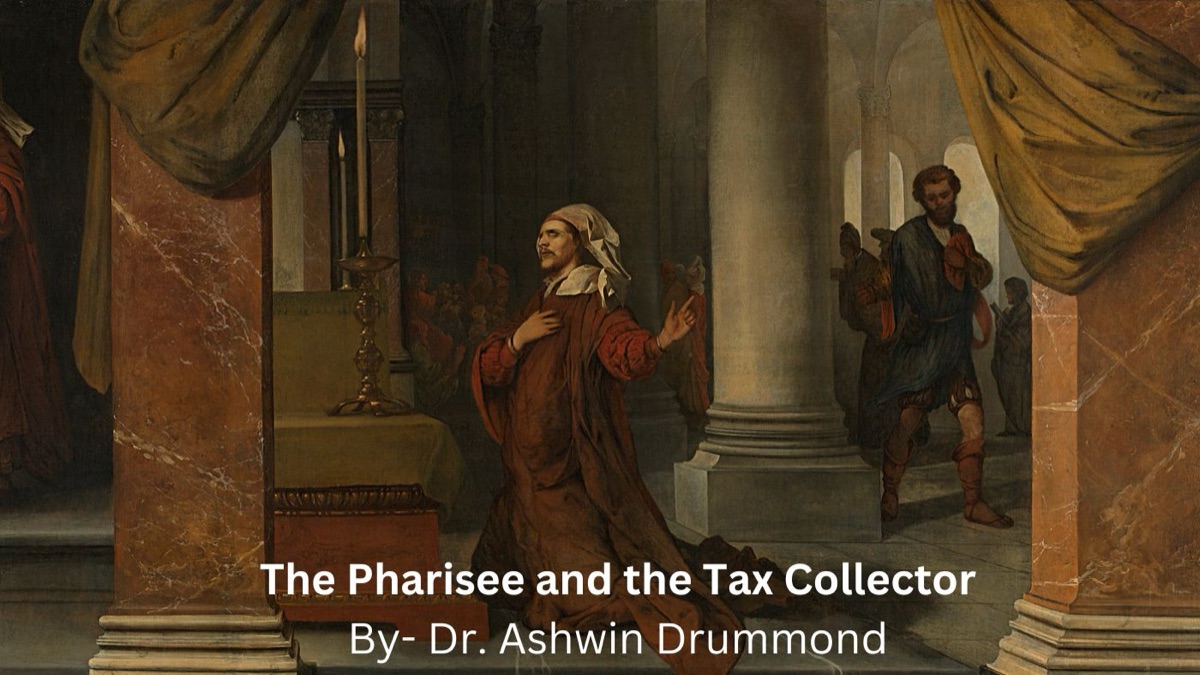
In this parable, a Pharisee and a tax collector go to the temple to pray. The Pharisee prayed about how good he was, but the tax collector asked for God’s mercy as he was a sinner. Jesus said that it was the tax collector who went home justified before God. Tax collectors weren’t just hated because they were considered turncoats and traitors, they were also considered dishonest. They would sometimes assess more taxes than was a legal requirement. Many tax collectors didn’t play by the rules. They were Jews who worked for the Romans, so this made them traitors. People resented paying taxes to the foreigners who ruled over them.
In Jesus’ day, the Pharisees were the strict Jews. They believed, they were disciplined and took the Law seriously. The Pharisee while praying submits as per Luke 18:11-12 “11 The Pharisee stood and prayed thus with himself, God, I thank thee, that I am not as other men are, extortioners, unjust, adulterers, or even as this publican. 12 I fast twice in the week, I give tithes of all that I possess.” Let us analyse the statement of the Pharisee:
• It is a statement of self-justification
• The attitude displayed is one of pride
• He did not have God on his mind when he went to the temple to pray. He was only thinking and boasting about himself.
• He is judging others when he says, I am not like other men; in fact, he thinks he is better than they are.
• He’s boasting about what he’s done. He is, as Jesus said, trusting in himself that he is righteous.
• The Pharisee has his hands full of self-¬righteousness.
In a similar fashion, let us also analyse the demeanor and attitude of the Tax Collector.
• The moment the Tax Collector enters the temple he realizes and acknowledges his net worth.
• He stands far off and even does not lift his eyes to heaven.
• He displays a correct attitude of humility.
• He acknowledges that he is not worthy and submits himself to the mercy of God.
• He beat his chest to demonstrate his sorrow. He cries out to God for mercy because he knows he’s a sinner who desperately needs it.
It is important that self-righteousness leads us nowhere. It is the imputed righteousness of Jesus that helps us to get our salvation. Of the two people who went to offer their prayers, in the end, only one goes right with the Lord. Pride leads to illusion and self-deception, while humility draws us close to our Saviour and His grace and mercy. In Luke 18:14, the Lord summaries “14 I tell you, this man went down to his house justified rather than the other: for every one that exalteth himself shall be abased; and he that humbleth himself shall be exalted.”
Dr Ashwin Drummond